
 Image 1 of 4
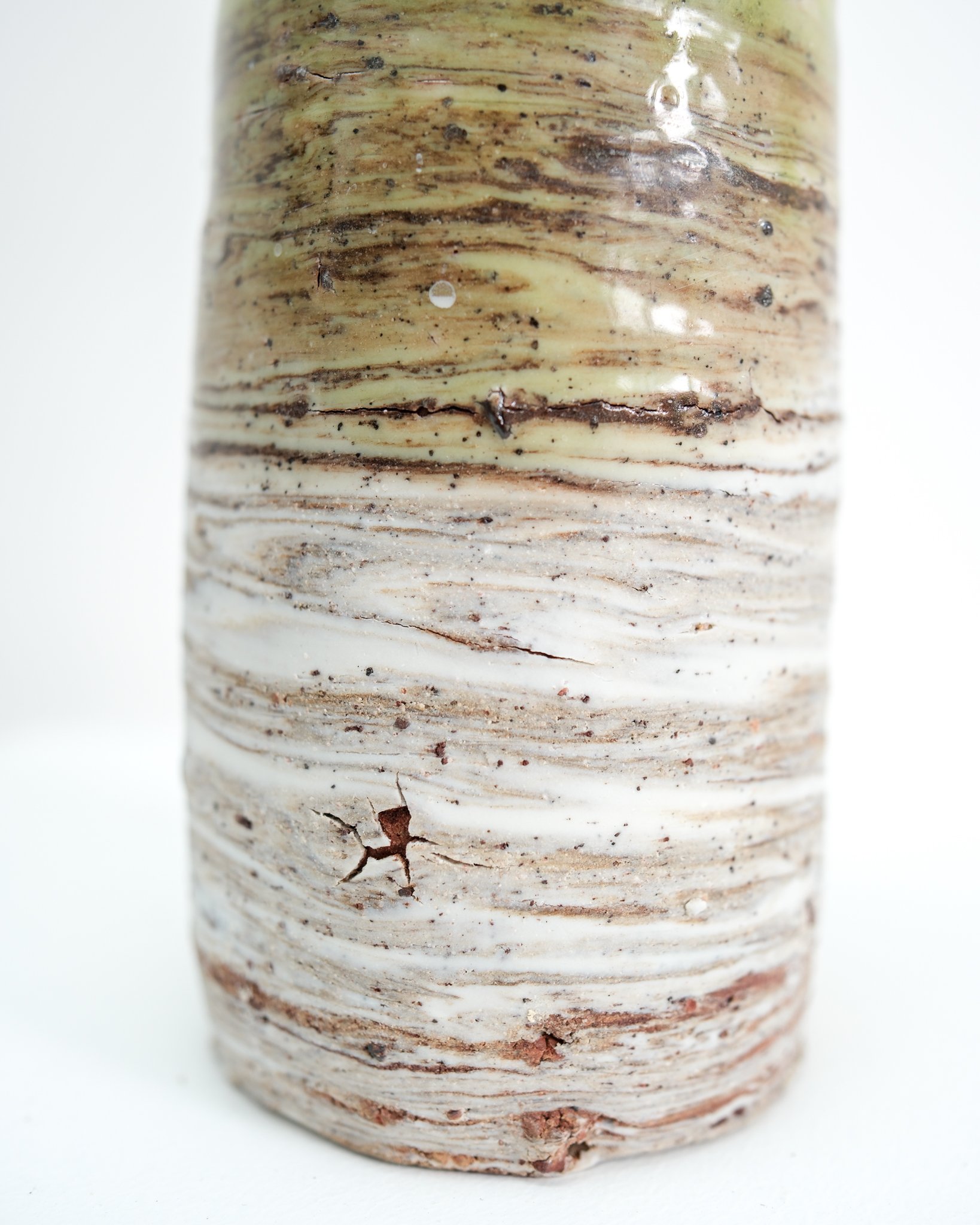 Image 2 of 4
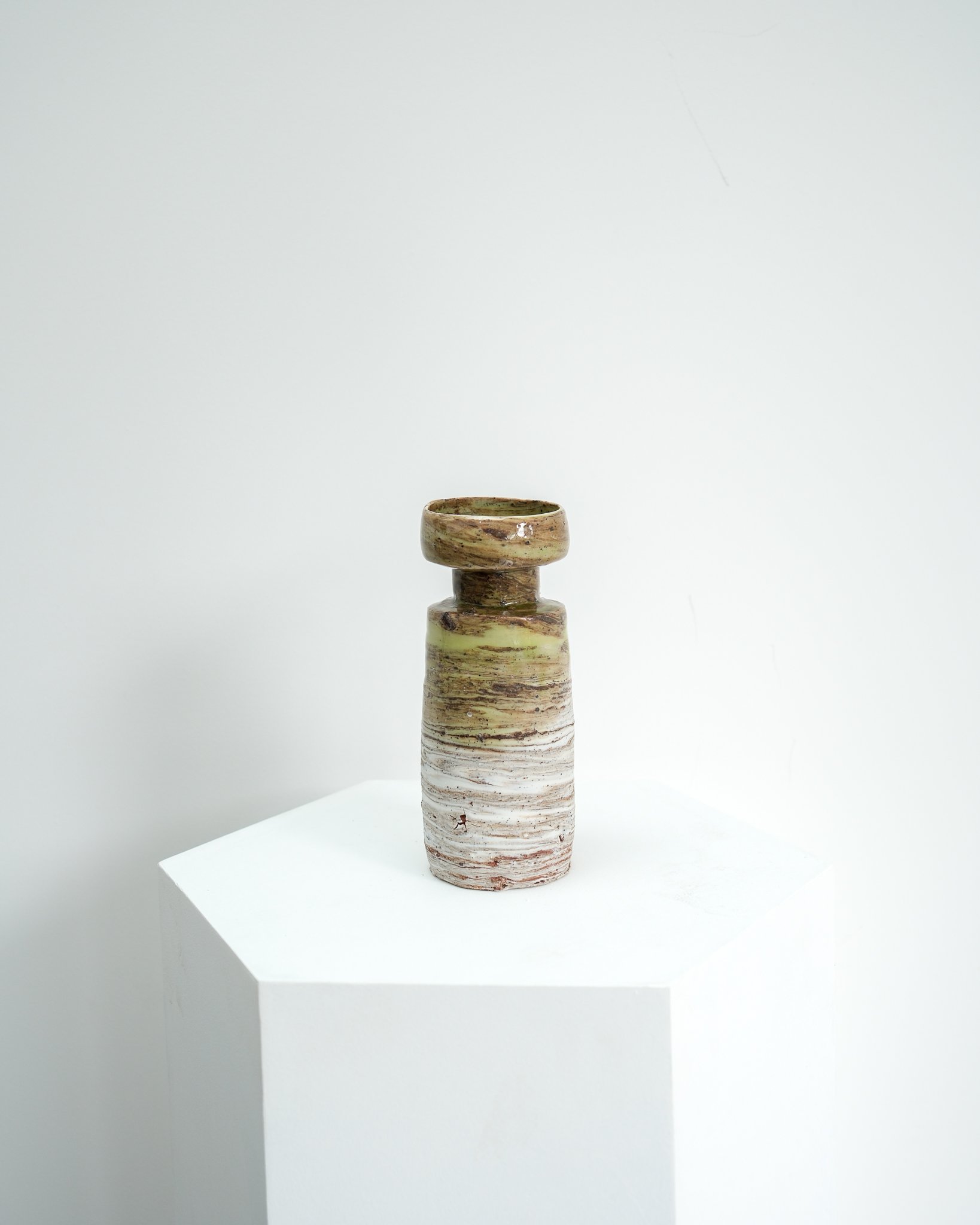 Image 3 of 4
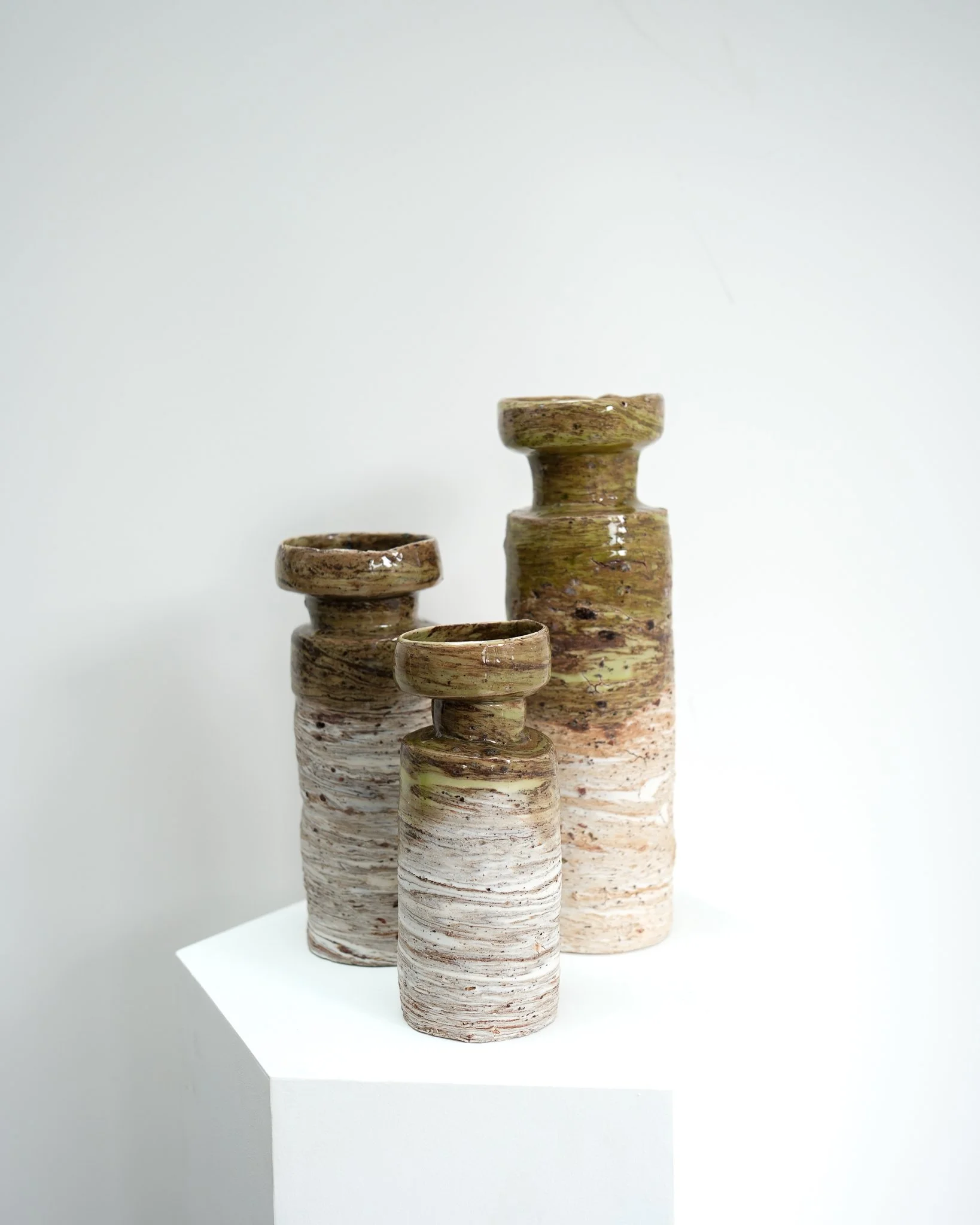 Image 4 of 4
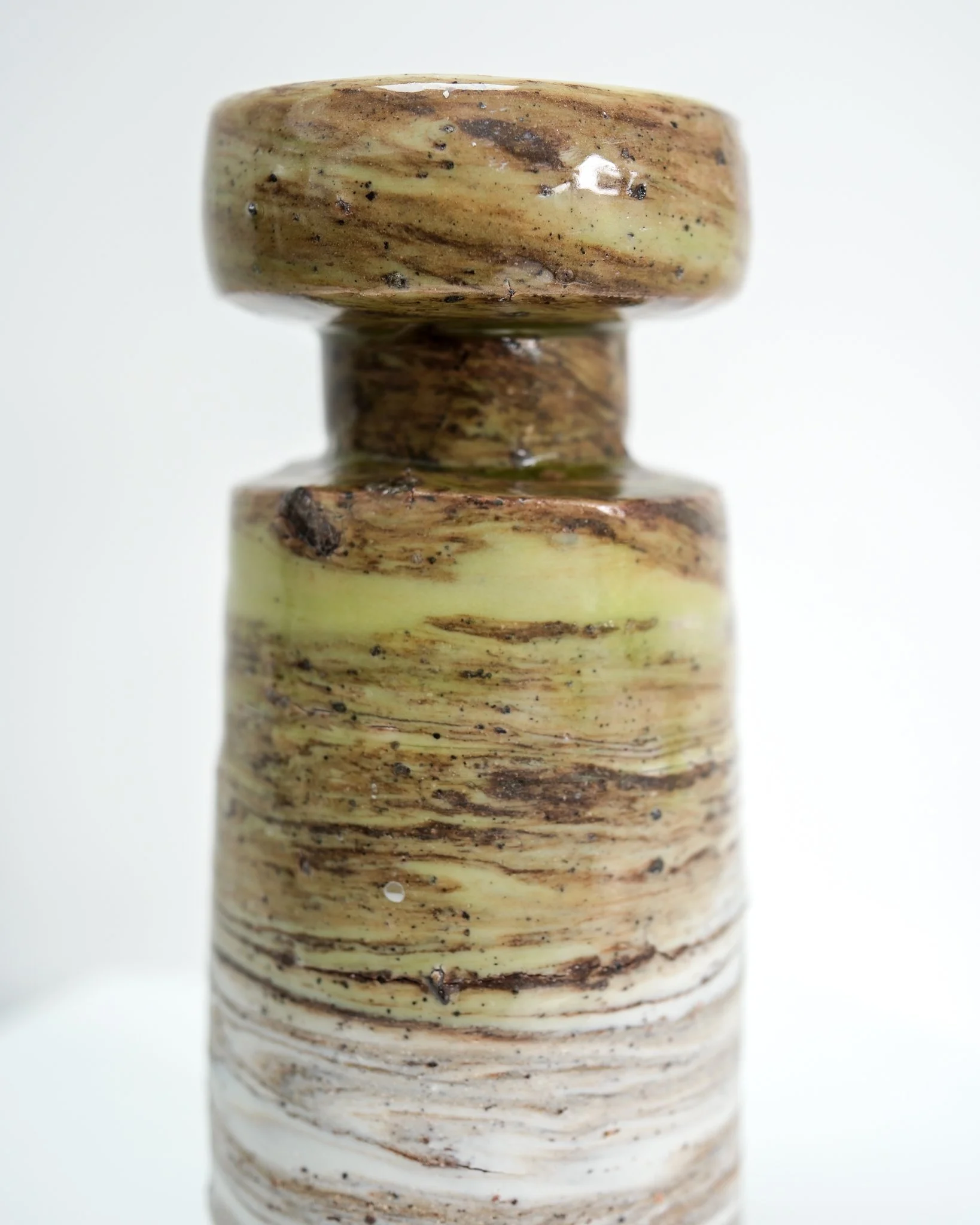
A soft green glaze is applied only to the upper third of the vessel, echoing moss, lichen and weathered stone, while the unglazed lower section reveals the raw strata of the layered clays beneath. This contrast celebrates both the refined qualities of porcelain and the rugged character of the wild Thames clay.
Although perfectly straight when it entered the kiln, the differing shrinkage rates of the two clays, together with the natural inclusions, caused the form to shift during firing. The resulting gentle movement gives the vessel its distinctive, organic profile—a reminder that the materials themselves play an active role in shaping the final piece
A soft green glaze is applied only to the upper third of the vessel, echoing moss, lichen and weathered stone, while the unglazed lower section reveals the raw strata of the layered clays beneath. This contrast celebrates both the refined qualities of porcelain and the rugged character of the wild Thames clay.
Although perfectly straight when it entered the kiln, the differing shrinkage rates of the two clays, together with the natural inclusions, caused the form to shift during firing. The resulting gentle movement gives the vessel its distinctive, organic profile—a reminder that the materials themselves play an active role in shaping the final piece